Emergency kits
What To Keep In A Car Emergency Kit
A practical car emergency kit checklist grouped by communication, visibility, battery, tire, weather, comfort, and personal needs.
What to know first
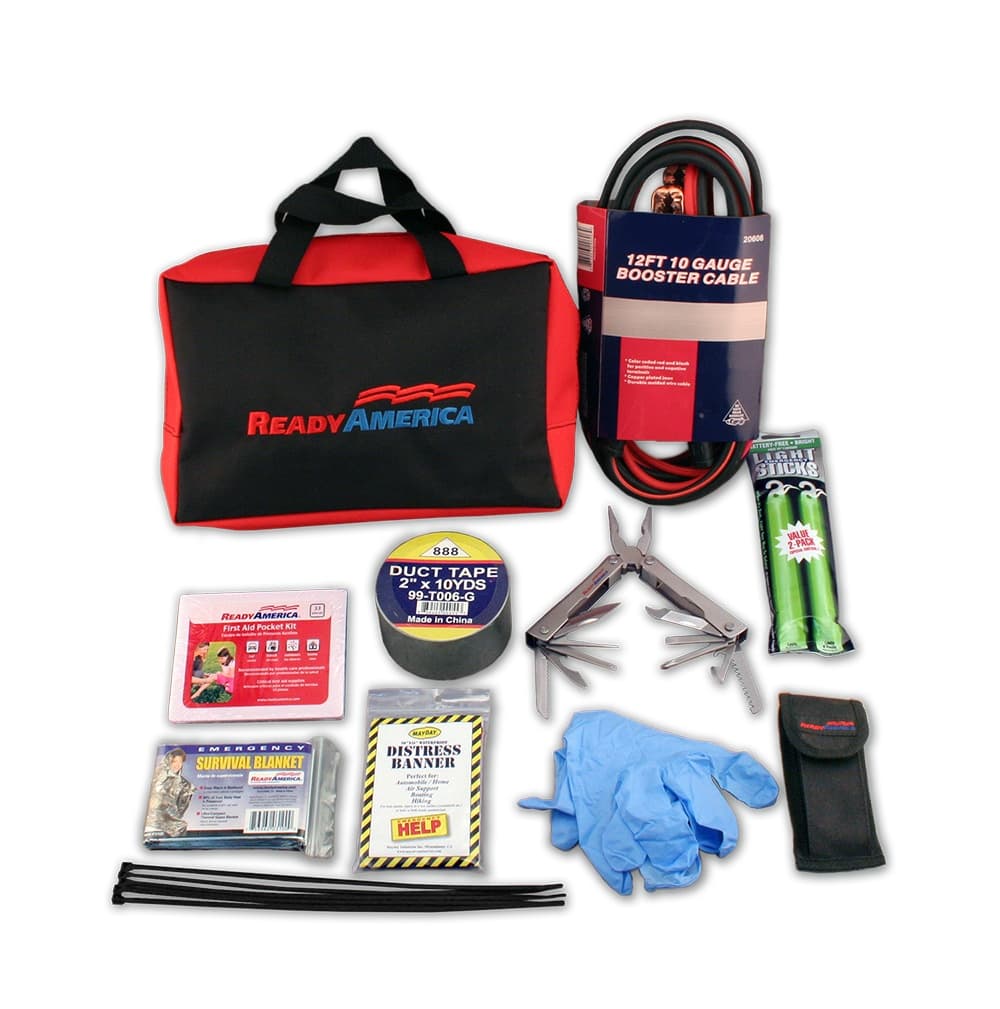
Keep a charged phone solution, visibility gear, a flashlight, jumper cables or a compatible jump starter, a tire pressure gauge, water, nonperishable food, basic comfort items, and climate-specific supplies.
- NHTSA lists cell phone and charger, first aid kit, flashlight, flares or markers, jumper cables, tire pressure gauge, gloves, water, food, medicines, and blankets among recommended supplies.
- Winter adds cold-weather items such as blankets, ice scraper, shovel, abrasive material, and warning devices.
- Personal medication, passenger needs, and local climate can change the kit.
Baseline Categories
Organize the kit by job instead of piece count. Communication helps you call for help, visibility helps your stopped vehicle be noticed, battery gear addresses common no-start situations, tire gear supports pressure checks, and comfort supplies help during delays.
- Communication: phone charger, backup power, emergency contacts.
- Visibility: flashlight, warning devices, reflective marker or vest where appropriate.
- Battery and tire: jumper cables or compatible jump starter, tire pressure gauge, inflator if it fits your routine.
- Comfort and personal needs: water, nonperishable food, medicine, blankets, towels, gloves, and weather layers.
Start with the job
Start with the exact job the kit needs to do in your vehicle. Then check power, storage, maintenance, and manufacturer instructions. A product that looks convenient online can be the wrong fit if it is too large to store, uses a power source you will not maintain, or depends on compatibility the listing does not clearly document.
Check fit before buying
Use the vehicle owner's manual, tire placard, and product instructions as the controlling sources. This site can explain what to compare, but it should not replace vehicle-specific requirements or product operating directions.
- Confirm the product's stated vehicle or use-case fit.
- Check dimensions, weight, charging, and storage limits before buying.
- Review warranty and replacement-part availability where relevant.
Relevant gear path
Next gear choices
Use the checklist or builder first, then compare a pre-made kit only if convenience matters.
How to use this guidance
Treat the kit as a gap-filling exercise, not a one-time purchase. Start with communication and visibility, then decide whether battery, tire, weather, comfort, and personal items are already covered or still missing.
Checks that matter
- Compare the included items against the baseline checklist.
- Look for missing climate and passenger supplies.
- Confirm the bag or storage format fits the actual vehicle space.
Important limitation
A kit can make supplies easier to find, but it does not replace vehicle maintenance, roadside assistance, or emergency judgment.
FAQs
What question does What To Keep In A Car Emergency Kit answer?
Give a baseline checklist drivers can adapt. Keep a charged phone solution, visibility gear, a flashlight, jumper cables or a compatible jump starter, a tire pressure gauge, water, nonperishable food, basic comfort items, and climate-specific supplies.
What should I do after reading Kit Checklist?
Turn the advice into a vehicle-specific list, then check storage space, climate needs, passenger needs, and what you already own before buying more gear.
Does this replace the vehicle manual?
No. Your vehicle manual, tire placard, and product instructions control compatibility, pressure, charging, storage, and use.
Does this gear make a roadside stop safe?
No product or checklist can guarantee safety. The goal is to help you organize practical gear and understand limitations before you buy.
Sources
- Summer Driving & Road Trip Tips, NHTSA. Checked 2026-10-18. Baseline road-trip vehicle checks and roadside-kit contents.
- Winter Weather Driving Tips, NHTSA. Checked 2026-10-18. Baseline winter vehicle-preparation and emergency-supply guidance.